| Disclosure: This post may contain affiliate links. As an Amazon Associate, I earn from qualifying purchases at no extra cost to you. |
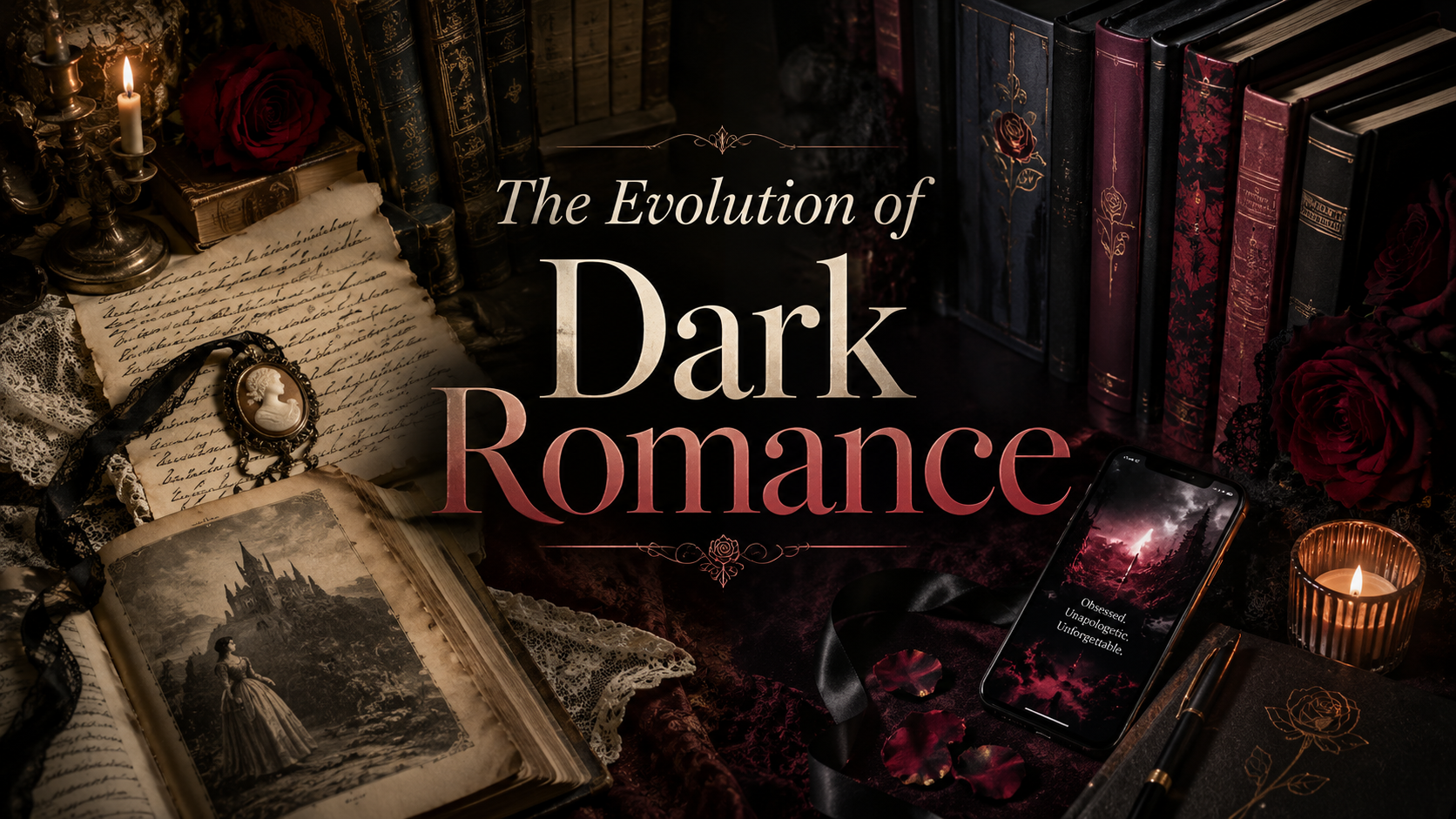
Dark romance did not appear out of nowhere.
It did not begin with BookTok edits, masked men, morally gray billionaires, stalker heroes, mafia kings, secret societies, or readers whispering, “Check the trigger warnings before you open this.”
Dark romance has been building for centuries.
Before it had a name, it lived inside gothic castles, storm-soaked moors, locked rooms, dangerous marriages, obsessive lovers, ruined reputations, family secrets, and heroines who could feel that something was wrong before they could prove it.
Before readers called it dark romance, they called it gothic fiction. Sensation fiction. Forbidden love. Tragic romance. Bodice-rippers. Taboo romance. Erotic suspense. Antihero romance. Captive romance. Mafia romance. Romantic horror. Psychological romance.
The label changed.
The hunger did not.
At its core, dark romance has always asked the same uncomfortable question:
What happens when love stops being safe, simple, polite, or socially acceptable — and becomes the most dangerous thing in the room?
That is why the genre keeps evolving. Readers are not just looking for a “bad boy.” They are looking for intensity. They are looking for emotional danger. They are looking for obsession, power, fear, temptation, survival, surrender, revenge, protection, ruin, and redemption — sometimes all in the same book.
And whether you love it, hate it, side-eye it, binge it at 2 a.m., or insist you are “just researching,” dark romance has become one of the most fascinating corners of modern fiction.
What Is Dark Romance?
Dark romance is a romance subgenre where the central relationship exists inside danger, taboo, moral grayness, trauma, obsession, coercive circumstances, violence, crime, psychological tension, or power imbalance.
The key word is romance.
Romance as a genre generally centers a love story and gives readers an emotionally satisfying or optimistic ending. The Romance Writers of America defines romance around those two core elements: a central love story and an emotionally satisfying, optimistic conclusion.
Dark romance bends everything around that structure.
It may include:
- morally gray or villainous love interests
- obsessive attachment
- revenge plots
- captivity or forced proximity
- mafia, crime, or secret society worlds
- taboo relationships
- stalker dynamics
- psychological manipulation
- trauma recovery
- erotic power exchange
- horror elements
- survival-based intimacy
- “I should run from him, but I can’t” tension
But dark romance is not simply “romance with bad behavior.” The best dark romance understands the emotional cost of its darkness. It does not just throw in shocking content for decoration. It makes the danger matter.
Dark romance works when the reader feels two things at once:
This is wrong.
I need to know what happens next.
Why Readers Are Drawn to Dark Romance
People often misunderstand dark romance because they take the fantasy too literally.
A reader enjoying a dark romance book does not automatically mean she wants those events in real life. In the same way someone can enjoy murder mysteries without wanting murder, horror movies without wanting a ghost in the hallway, or mafia shows without wanting organized crime at dinner, dark romance allows readers to explore fear, danger, obsession, and desire inside a controlled fictional space.
The appeal often comes from the contradiction.
Dark romance gives readers:
Danger with emotional payoff.
The story may be brutal, but the relationship still carries intensity, devotion, or transformation.
Fear without real-world consequences.
The reader can close the book. That control matters.
A fantasy of being chosen obsessively.
Not casually liked. Not texted back after three days. Chosen with terrifying certainty.
Power dynamics that are narratively contained.
The fantasy is not always about being powerless. Sometimes it is about surviving, resisting, bargaining, changing the rules, or becoming powerful in a world that tried to consume the heroine.
Permission to feel complicated things.
Dark romance is not usually clean, wholesome, or socially approved. That is part of the charge.
A lot of readers are not there for “healthy relationship goals.” They are there for emotional extremity.
They want a book that feels like standing too close to a fire.
My Personal Introduction to the Dark Side of Romance
For me, the pull toward dark romance started before I even had the language for it.
My favorite book has always been Jane Eyre, and looking back, that makes perfect sense. It had everything that would eventually draw me toward darker love stories: the isolated house, the brooding man, the secrets hidden behind closed doors, the age gap, the emotional restraint, the moral conflict, and that constant feeling that love and danger were standing in the same room.
I did not read Jane Eyre and think, “I like dark romance.”
I read it and thought, “Why does this feel so much more alive than a normal love story?”
Then, as a teenager, Companions of the Night by Vivian Vande Velde sealed the deal for me. It was not traditional dark romance, but it had the exact ingredients that made my brain light up: a smart teen heroine, a dangerous supernatural boy, late-night danger, murder, vampires, tension, fear, and the possibility of romance threaded through all of it. The author’s own description centers sixteen-year-old Kerry helping a young man escape from men who claim he is a vampire, only to be thrown into bizarre and dangerous choices, which is exactly the kind of setup that trains a reader to crave romance with teeth.
That was the real gateway.
Not because I wanted safe love stories.
Because I wanted love stories that felt haunted.
I wanted the locked door.
The secret.
The man you could not fully trust.
The heroine who knew she should be afraid but could not look away.
The romance that felt like it was happening too close to the edge.
So when people ask why dark romance became so addictive, I understand it on a personal level. For some readers, the genre does not begin with the darkest book they ever read. It begins with a feeling: the first time a story makes romance feel mysterious, dangerous, forbidden, and impossible to forget.

The Gothic Roots: Where Dark Romance Began
If dark romance has a birthplace, it is probably the gothic novel.
Gothic fiction became established in the eighteenth century, with Horace Walpole’s The Castle of Otranto in 1764 often named as one of the genre’s foundational works. Gothic fiction was known for foreboding atmosphere, strange events, grotesque characters, secrets, danger, and emotional excess.
That matters because so much of modern dark romance is gothic at its bones.
The isolated mansion becomes the mafia estate.
The locked room becomes the forbidden basement.
The dangerous lord becomes the morally gray billionaire.
The heroine’s suspicion becomes psychological suspense.
The family curse becomes generational trauma.
The storm outside becomes the storm inside the relationship.
Gothic fiction gave romance something darker to breathe.
It made love feel haunted.
Early Gothic Examples That Shaped the Mood
The Castle of Otranto by Horace Walpole
This is not dark romance in the modern sense, but it helped establish the atmosphere that dark romance still uses: castles, secrets, danger, inheritance, power, and looming doom.
The Mysteries of Udolpho by Ann Radcliffe
Ann Radcliffe helped shape gothic romance through atmosphere, suspense, and heroines trapped inside threatening environments. Her work is often tied to the development of gothic romance traditions.
The Monk by Matthew Lewis
A scandalous gothic novel filled with lust, corruption, obsession, and religious hypocrisy. Again, not modern dark romance, but absolutely part of the darker literary bloodline.
These early gothic works were not packaged with discreet covers and spice ratings, but they planted the seed: romance could be frightening. Desire could be dangerous. Love could exist in rooms where something was very, very wrong.
The Nineteenth Century: Brooding Men, Moral Conflict, and Dangerous Attachment
By the nineteenth century, readers were already being pulled toward emotionally dangerous love stories.
This is where we get some of the most recognizable ancestors of dark romance: brooding heroes, isolated heroines, social ruin, obsession, jealousy, and relationships that feel half-romance, half-haunting.
Jane Eyre by Charlotte Brontë (My personal favorite of all time)
Jane Eyre is not dark romance by today’s standards, but it contains several ingredients that modern dark romance readers recognize immediately:
- a young woman in a vulnerable position
- a powerful older man
- a mysterious house
- secrets hidden behind locked doors
- moral conflict
- attraction mixed with fear
- love that cannot move forward until truth is exposed
Rochester is not a modern dark romance hero, but he is a prototype of the brooding, morally complicated man readers cannot easily dismiss.
Wuthering Heights by Emily Brontë
If Jane Eyre is gothic longing, Wuthering Heights is emotional destruction.
Heathcliff is obsessive, vengeful, cruel, wounded, and unforgettable. The relationship between Heathcliff and Catherine is not aspirational. It is not soft. It is not a blueprint for happiness.
It is possession, class rage, trauma, pride, punishment, and love as a haunting.
That is why Wuthering Heights still gets discussed in dark romance conversations. It understands something the genre still understands today: some love stories are not comforting because they are not about comfort.
They are about being consumed.
A 2026 discussion around a new Wuthering Heights adaptation even described the story through a “dark romance” lens, showing how strongly Brontë’s emotional brutality still connects to the modern language of the genre.
The Twentieth Century: Gothic Romance Becomes Marketable
The twentieth century took gothic atmosphere and made it more recognizable to commercial romance readers.
This is where isolated estates, secretive husbands, eerie houses, and vulnerable heroines became part of popular romantic suspense.
Rebecca by Daphne du Maurier
Rebecca is one of the most important gothic-romance-adjacent novels for understanding dark romance’s emotional DNA.
It has:
- a young heroine
- a powerful older husband
- a grand house that feels alive
- a dead woman whose presence dominates the marriage
- psychological unease
- obsession, insecurity, and identity collapse
The romance in Rebecca is unsettling because the heroine is not just falling in love. She is entering a world where she does not know the rules, where the past is still breathing, and where love feels inseparable from fear.
That is extremely dark-romance coded.
Dragonwyck by Anya Seton
Dragonwyck gives us another key piece of the evolution: the dangerous aristocratic man, the innocent heroine, the estate full of secrets, and the sense that desire may be leading someone straight into a trap.
This type of gothic romance helped normalize a fantasy that still drives dark romance today:
The heroine enters his world, and his world is beautiful, powerful, seductive, and unsafe.
Mistress of Mellyn by Victoria Holt
Victoria Holt’s gothic romances helped popularize the governess-in-a-mansion setup: mysterious employer, strange estate, romantic suspense, and the sense that the heroine is walking into a story already soaked in secrets.
Modern dark romance still uses this structure constantly. The setting changes, but the emotional architecture remains.
A heroine enters a closed world.
A man controls that world.
The house, family, organization, club, school, or criminal empire has rules she does not understand.
And the love story becomes a battle between attraction and survival.
The Bodice-Ripper Era: Consent, Power, and the Complicated Legacy
To understand dark romance honestly, you have to talk about bodice-rippers.
The 1970s and 1980s changed popular romance. Covers became more sensual. Stories became more explicit. Heroes became more dominant. Heroines were often placed in perilous circumstances. The “clinch cover” era became one of romance’s most recognizable visual periods, especially during the 1970s through 1990s.
These books are controversial for good reason.
Many older romances included power dynamics and consent issues that modern readers would classify as dark, problematic, or outright unacceptable. But they also shaped the genre’s fascination with:
- forced proximity
- dangerous men
- sexual awakening
- captivity narratives
- enemies-to-lovers intensity
- heroines surviving male-dominated worlds
- love that begins in conflict
This era matters because it reveals something dark romance is still wrestling with:
Where is the line between fantasy, danger, erotic tension, and harm?
Modern dark romance did not invent that question. It inherited it.
The difference is that today’s readers talk about it more openly. They use trigger warnings. They debate consent. They distinguish fantasy from endorsement. They argue over whether a book handled darkness responsibly or simply used trauma as shock value.
That conversation is part of the genre now.
The 1990s and 2000s: Romantic Suspense, Antiheroes, and the Rise of the Morally Gray Man
Before “dark romance” became a common shelf label, readers were already finding dark-romance energy in romantic suspense, erotic thrillers, vampire romance, mafia-adjacent stories, paranormal romance, and morally gray antihero books.
The hero became less clean.
He might be dangerous, criminal, cursed, emotionally damaged, violent, secretive, or morally compromised. But the story still wanted readers to desire him.
This period helped bridge the gap between old gothic danger and modern dark romance.
The villain was no longer always outside the romance.
Sometimes he was the romance.
That shift is huge.
In traditional romantic suspense, the danger often comes from an external villain. In dark romance, the danger may come from the love interest himself, the world he belongs to, or the dynamic between the couple.
That is the genre’s most controversial move.
It makes the romantic lead part of the threat.
And once romance readers got a taste for that kind of tension, there was no going back.
The Indie Boom: When Dark Romance Found Its True Home
Dark romance exploded because indie publishing gave it room to exist without asking for permission.
Traditional publishing often has to think about bookstore placement, mainstream comfort levels, gatekeeper expectations, and market categories. Indie publishing allowed authors to write directly for readers who wanted more intensity, more taboo, more spice, more danger, and more morally complicated heroes.
That freedom changed everything.
Indie dark romance could be:
- too taboo for traditional romance shelves
- too romantic for horror
- too erotic for thriller
- too violent for mainstream contemporary romance
- too emotionally intense for neat genre labels
Instead of softening the edges, indie authors sharpened them.
They wrote the books readers whispered about.
Then readers stopped whispering.
BookTok and the Viral Dark Romance Explosion
BookTok did not create dark romance.
But it absolutely poured gasoline on it.
TikTok and BookTok turned reading into a visual, emotional, shareable experience. Suddenly, a book was not just a book. It was an aesthetic. A playlist. A quote graphic. A masked-man edit. A “read the trigger warnings” warning label. A reaction video. A confession.
Recent reporting has tied BookTok to the surge of romance culture across media, with romance adaptations and scripted romance content gaining major attention from audiences, especially younger viewers.
Dark romance is especially viral because it is built for emotional reaction.
It has hooks that stop people mid-scroll:
Dark romance did not just become something readers consumed. It became something readers tracked, displayed, and built rituals around. There is something deeply satisfying about watching your reading year stack up, especially when your shelves are full of gothic classics, morally gray heroes, vampire obsession, and “I probably should not have loved him” books.
That visual identity is part of why dark romance readers tend to care so much about their shelves. The genre almost begs to be displayed: black covers, red foiling, gothic spines, sprayed edges, morally gray men lined up like warnings you ignored on purpose.
For readers building a dramatic book corner, a rotating bookshelf is a natural fit because it lets you keep your most addictive reads close without needing a full wall of shelving. It works especially well for current reads, favorite dark romance authors, gothic classics, and the books you reach for when you want something moody, obsessive, or beautifully unhinged.
If you like physically tracking your reading progress, this Books Read This Year Counter would fit perfectly on a dark romance shelf, reading cart, or bedside book nook. It turns your reading goal into part of the atmosphere — which feels very appropriate for a genre where the mood matters almost as much as the plot.
- “He stalks her, but…”
- “The villain gets the girl.”
- “Read the trigger warnings.”
- “This book made me question my morals.”
- “I hated him. Then I loved him. Then I needed therapy.”
- “Masked men. Secret society. Touch her and die.”
Dark romance also became connected to music and mood. Recent cultural coverage has even discussed “dark romance” BookTok music trends, where moody, sensual, dramatic songs become part of the reading experience and help create a shared aesthetic around obsession, danger, and fantasy.
That is why the genre spreads so well online.
A lighthearted rom-com can be loved quietly.
A dark romance begs to be confessed.
How Dark Romance Tropes Have Changed Over Time
Dark romance has evolved from atmosphere-based fear to trope-based intensity.
Older gothic romance often relied on:
- haunted houses
- secret wives
- family curses
- inheritance mysteries
- isolated estates
- brooding aristocrats
- hidden crimes
- moral dread
Modern dark romance often uses:
- stalker heroes
- mafia families
- masked men
- secret societies
- kidnapping/captivity setups
- revenge plots
- bully romance
- taboo relationships
- morally gray billionaires
- forced marriage
- obsession
- “touch her and die” protection
- trauma bonds
- erotic power exchange
The setting has changed, but the engine is the same.
A woman enters danger.
A man embodies danger.
The relationship becomes the place where fear and desire collide.
Dark Romance vs. Gothic Romance
Dark romance and gothic romance overlap, but they are not identical.
Gothic romance usually emphasizes atmosphere, mystery, dread, isolation, secrets, and psychological unease.
Dark romance emphasizes morally complicated romantic dynamics, taboo, danger, power imbalance, obsession, or trauma inside the relationship itself.
A gothic romance might make you wonder:
What happened in this house?
A dark romance might make you wonder:
What is he capable of doing to her — and what is he capable of doing for her?
Gothic romance is often haunted by the past.
Dark romance is often haunted by desire.
Dark Romance vs. Romantic Suspense
Romantic suspense usually has a romantic relationship plus external danger: a murderer, stalker, crime, conspiracy, or threat.
Dark romance may include suspense, but the danger often comes from inside the romance itself.
In romantic suspense, the hero may protect the heroine from the villain.
In dark romance, the hero may be the villain.
Or at least close enough to make the reader nervous.
That is the difference.
Dark Romance vs. Erotic Romance
Erotic romance focuses heavily on sexual relationship development and erotic chemistry.
Dark romance may be spicy, but spice is not the defining feature. Some dark romance is extremely explicit. Some is more psychological than physical.
The defining feature is not heat.
It is darkness.
A book can be very spicy and not dark.
A book can be dark and not extremely spicy.
A book can be both, which is where much of the modern market lives.
The Evolution of the Dark Romance Hero
The dark romance hero has gone through several forms.
1. The Gothic Master
He owns the house.
He knows the secret.
He is older, richer, colder, and more powerful than the heroine.
He may be wounded, cruel, mysterious, or hiding something unforgivable.
This is the ancestor of the modern controlling hero.
2. The Brooding Romantic Antihero
He is emotionally damaged.
He is not safe, but he is compelling.
He may hurt people, but the reader understands why.
He is not a villain exactly — but he is not clean either.
This type gave romance permission to desire complicated men.
3. The Alpha Possessive Hero
He dominates the page.
He is jealous, protective, controlling, intense, and often dangerous.
He may be a crime boss, fighter, billionaire, outlaw, or leader.
This type became a major commercial engine for darker romance.
4. The Villain Hero
This is where modern dark romance gets bold.
The hero is not “misunderstood.”
He is not just grumpy.
He is not a cinnamon roll with tattoos.
He may be violent, obsessive, manipulative, criminal, predatory, vengeful, or morally corrupt.
The question is no longer, “Is he good?”
The question is:
Why do I still want him to choose her?
5. The Trauma-Bonded Hero
This modern version is not just dark because he is dangerous.
He is dark because he is broken.
These stories often explore grief, abuse, revenge, mental instability, violence, or survival. The romance becomes a place where two damaged people recognize each other in ways no one else can.
When written well, this version can be emotionally devastating.
When written lazily, it can become trauma wallpaper.
That difference matters.
The Evolution of the Dark Romance Heroine
The heroine has evolved just as much as the hero.
Early gothic heroines were often young, vulnerable, isolated, and trapped in systems controlled by men. Their power came from endurance, intuition, morality, and survival.
Modern dark romance heroines can still be vulnerable, but they are often more active.
They may be:
- survivors
- investigators
- fighters
- morally gray themselves
- emotionally guarded
- sexually curious
- revenge-driven
- traumatized but not passive
- trapped, but strategic
- afraid, but not weak
The best dark romance heroines are not just objects of obsession.
They are participants in the story’s darkness.
They make choices. They resist. They negotiate. They break. They adapt. Sometimes they become darker too.
That evolution is one reason the genre keeps growing. Readers do not only want to watch a dangerous man possess a woman.
They want to see what she does with that danger.
Why Trigger Warnings Became Part of the Genre
Dark romance is one of the genres where trigger warnings are not optional decoration. They are part of reader trust.
Because dark romance may include heavy themes, readers need to know what they are walking into. A good trigger warning does not spoil the entire plot. It gives readers enough information to decide whether the book is right for them.
Common dark romance trigger warnings may include:
- stalking
- kidnapping
- captivity
- violence
- assault
- dubious consent
- non-consent
- abuse
- self-harm
- trauma
- murder
- torture
- pregnancy/breeding themes
- grief
- addiction
- psychological manipulation
- blood/gore
- religious trauma
- incest/taboo themes
- age gaps
- toxic relationships
Trigger warnings do not weaken dark romance.
They protect the reader’s ability to choose.
And choice is especially important in a genre that often plays with control.
Why Dark Romance Is So Controversial
Dark romance is controversial because it sits at the intersection of fantasy, sexuality, morality, trauma, and women’s desire.
That is a loaded place to sit.
Critics worry that dark romance glamorizes abuse, stalking, coercion, or toxic relationships.
Fans argue that fiction is not a conduct manual, and that readers can separate fantasy from real-life standards.
Both conversations matter.
The strongest defense of dark romance is not “nothing in fiction matters.” Fiction does matter. Stories shape feelings, fantasies, language, and expectations.
But the strongest criticism is not “anyone who reads dark romance wants abuse.” That is shallow, insulting, and usually untrue.
The real conversation is more nuanced:
- Did the book frame harm as romantic without emotional consequence?
- Did the heroine have agency?
- Did the story understand the difference between fantasy and endorsement?
- Did the darkness serve the emotional arc?
- Did the book warn readers honestly?
- Did the ending feel earned or simply convenient?
- Is the reader consuming this as fantasy, catharsis, taboo exploration, or comfort through extremity?
Dark romance deserves criticism.
It also deserves to be understood.
Why the Genre Feels Bigger Than Ever
Dark romance is thriving because it fits the current reading culture perfectly.
Modern readers are overwhelmed, overstimulated, emotionally hungry, and constantly marketed sanitized versions of love. Dark romance offers the opposite.
It is not polished.
It is not polite.
It is not always morally comfortable.
It is not pretending everyone is okay.
The genre says:
You can be messy here.
You can want the wrong thing here.
You can explore fear here.
You can crave intensity here.
You can read something extreme and still know who you are when you close the book.
That emotional permission is powerful.
Dark romance also benefits from the larger romance boom. Romance has become more visible across publishing, streaming, social media, and pop culture. Recent entertainment coverage has pointed to BookTok’s role in fueling demand for romance adaptations and scripted romantic content.
When romance rises, its subgenres rise too.
And dark romance is one of the loudest, most shareable, most debate-friendly subgenres there is.
Book Examples That Show the Evolution of Dark Romance
These are not all modern dark romance books. Some are ancestors, cousins, or influence points. That is what makes them useful for understanding the genre’s evolution.
The Castle of Otranto by Horace Walpole
Why it matters: The gothic atmosphere starts here: castles, power, fear, family secrets, and emotional dread.
Evolution stage: Gothic origin point
Dark romance DNA: danger, confinement, power, looming threat
Best for readers interested in: where the haunted architecture of dark romance began
Spice level: None
Darkness level: Moderate by modern standards
Trigger warnings: death, coercion, gothic violence
The Mysteries of Udolpho by Ann Radcliffe
Why it matters: Radcliffe helped shape the gothic heroine: emotionally sensitive, isolated, threatened, and surrounded by mystery.
Evolution stage: Gothic romance foundation
Dark romance DNA: vulnerable heroine, threatening setting, psychological suspense
Best for readers interested in: the emotional roots of gothic romance
Spice level: None
Darkness level: Mild to moderate
Trigger warnings: imprisonment themes, fear, death, patriarchal control
The Monk by Matthew Lewis
Why it matters: This is one of the most scandalous gothic novels, filled with religious corruption, lust, violence, and transgression.
Evolution stage: Gothic shock and taboo
Dark romance DNA: forbidden desire, corruption, moral collapse
Best for readers interested in: the taboo side of gothic fiction
Spice level: Low by modern standards, scandalous historically
Darkness level: High for classic gothic
Trigger warnings: sexual violence, murder, religious abuse, coercion
Jane Eyre by Charlotte Brontë
Why it matters: The brooding hero, the isolated heroine, the secret in the house, and the love story tangled with moral danger all helped create the emotional blueprint readers still recognize.
Evolution stage: Gothic romantic conflict
Dark romance DNA: age gap, power imbalance, secret wife, forbidden love
Best for readers interested in: morally complicated classic romance
Spice level: None
Darkness level: Moderate
Trigger warnings: abuse, confinement, mental illness depiction, manipulation
Wuthering Heights by Emily Brontë
Why it matters: This is one of literature’s clearest examples of love as obsession, revenge, haunting, and destruction.
Evolution stage: Obsessive tragic romance
Dark romance DNA: possessive love, revenge, emotional cruelty, generational damage
Best for readers interested in: the “love as ruin” side of the genre
Spice level: None
Darkness level: High emotionally
Trigger warnings: abuse, cruelty, death, grief, obsession
Rebecca by Daphne du Maurier
Why it matters: Rebecca shows how romance can feel like psychological horror when the heroine is swallowed by a man’s house, history, and dead first wife.
Evolution stage: Psychological gothic romance
Dark romance DNA: powerful husband, identity insecurity, secrets, emotional manipulation
Best for readers interested in: atmospheric dread and marriage-as-mystery
Spice level: None
Darkness level: Moderate
Trigger warnings: death, manipulation, emotional abuse, murder implications
Dragonwyck by Anya Seton
Why it matters: A young woman enters the world of a powerful, magnetic man and slowly realizes the fantasy may be dangerous.
Evolution stage: Gothic domestic danger
Dark romance DNA: dangerous aristocrat, estate secrets, romantic illusion collapsing
Best for readers interested in: the seductive-dangerous-man archetype
Spice level: Low
Darkness level: Moderate
Trigger warnings: death, manipulation, toxic marriage dynamics
Mistress of Mellyn by Victoria Holt
Why it matters: This is a classic gothic romance setup: heroine, mysterious estate, brooding man, secrets, and romantic suspense.
Evolution stage: Commercial gothic romance
Dark romance DNA: isolated heroine, power imbalance, hidden past
Best for readers interested in: the bridge between gothic classics and modern romantic suspense
Spice level: Low
Darkness level: Mild to moderate
Trigger warnings: death, secrets, gothic peril
Flowers in the Attic by V.C. Andrews
Why it matters: Not a romance in the genre sense, but impossible to ignore when discussing taboo, captivity, family secrets, and the way forbidden relationships became part of popular dark fiction.
Evolution stage: Taboo domestic gothic
Dark romance DNA: confinement, taboo, family horror, psychological damage
Best for readers interested in: the disturbing domestic side of dark fiction
Spice level: Low
Darkness level: High
Trigger warnings: child abuse, captivity, incest themes, neglect, death
Interview with the Vampire by Anne Rice
Why it matters: Anne Rice helped make eroticized darkness, immortality, obsession, beauty, violence, and monstrous longing feel lush and emotionally seductive.
Evolution stage: Sensual gothic paranormal
Dark romance DNA: immortal obsession, moral corruption, beauty mixed with horror
Best for readers interested in: romanticized monsters and gothic sensuality
Spice level: Low to moderate
Darkness level: High
Trigger warnings: death, blood, violence, predation, grief
Where Dark Romance Is Going Next
Dark romance is not done evolving.
The next wave is already moving in several directions.
1. More Hybrid Genres
Dark romance is blending with:
- romantasy
- horror romance
- monster romance
- psychological thriller
- why-choose romance
- gothic academia
- dystopian romance
- dark small-town romance
- paranormal obsession stories
Readers no longer want neat boxes. They want mood.
2. More Female Rage
Expect more heroines who are not simply rescued from darkness, but shaped by it.
The “good girl meets dangerous man” structure is evolving into:
dangerous woman meets dangerous man
or
wounded woman becomes terrifying in her own right
That shift is already making dark romance more interesting.
3. More Moral Debate
The genre will keep being criticized, defended, dissected, and fought over.
That will not kill it.
It may actually strengthen it.
Dark romance thrives on controversy because the entire genre is built around forbidden emotional territory.
4. Better Trigger Warnings and Reader Targeting
Readers are becoming more specific. They do not just ask, “Is it dark?”
They ask:
- Is there non-con?
- Is there cheating?
- Is it bully romance?
- Is the hero redeemable?
- Does the heroine fight back?
- Is the ending HEA or HFN?
- Is the darkness external or between the couple?
- Is it psychological, violent, taboo, or erotic?
Dark romance readers are some of the most trope-literate readers in the entire romance market.
They know exactly what they want.
5. More Aesthetic Branding
Dark romance is not just a genre anymore. It is a visual language.
Black covers. Red lettering. Masks. Knives. Roses. Churches. Blood. Lace. Candlelight. Rain. Locked doors. Playlists. Quote graphics. “Read the trigger warnings” captions.
The genre has become instantly recognizable online.
And that makes it even more viral.
Why Dark Romance Will Not Go Away
Dark romance will not disappear because it answers a need that polite romance cannot always satisfy.
Some readers want comfort.
Some readers want softness.
Some readers want banter, coffee shops, fake dating, cinnamon-roll heroes, and low-stakes joy.
But some readers want to be emotionally dragged through a haunted mansion by the throat.
They want to feel the edge.
They want the man who should not want her.
The woman who should run.
The secret that ruins everything.
The kiss that feels like a threat.
The love story that makes them question why they are still turning pages.
That is dark romance.
Not because it is always healthy.
Not because it is always defensible.
Not because every book does it well.
But because the genre understands that desire is not always tidy. Fear can sharpen attraction. Power can complicate longing. Obsession can be horrifying and magnetic. And sometimes the fantasy readers want is not the safe man in daylight.
Sometimes it is the dangerous one waiting in the dark.
Related Reading on Eerie Efficiency
Add these internal links naturally throughout the post:
- Dark Romance Tropes Explained
- Dark Romance Books for Beginners
- Dark Romance Books With Possessive Heroes
- Stalker Dark Romance Books
- Mafia Romance Books
- Forced Proximity Dark Romance Books
- Touch Her and Die Romance Books
- Taboo Dark Romance Books
- Best Dark Romance Books of All Time (Ultimate Guide for Obsessive Readers)
Read My Fiction
For readers who love slow-burn obsession, age-gap tension, forbidden want, and emotionally messy romance, add a section like this near the end:
Want a dark, forbidden slow burn after this?
Read my fiction here:

Build Your Own Dark Romance Reading Ritual
Part of the reason dark romance has become so addictive is that it is not just about the book itself. It is the whole ritual: the late-night reading, the low lighting, the dramatic playlist, the “one more chapter” lie, the black covers stacked beside your bed, and the feeling that you are entering a story you probably should not trust.
If you are building a reading corner for gothic romance, dark romance, romantasy, or morally gray obsession books, start with pieces that make the experience feel intentional. A rotating bookshelf is perfect for keeping your current reads, favorite gothic classics, and most-recommended dark romance books within reach.
And if you like seeing your reading progress build throughout the year, this Books Read This Year Counter makes your reading goal part of the decor. It is the kind of small bookish detail that makes a shelf feel less like storage and more like a shrine to every fictional red flag you willingly ignored.
FAQ: The Evolution of Dark Romance
What was the first dark romance book?
There is no single “first” dark romance book because the genre evolved from several older traditions, including gothic fiction, gothic romance, sensation fiction, taboo fiction, romantic suspense, and erotic romance. However, gothic novels like The Castle of Otranto, The Mysteries of Udolpho, and The Monk helped establish many of the dark, dangerous, forbidden elements that later influenced dark romance.
Is dark romance the same as gothic romance?
No. Gothic romance usually focuses on atmosphere, mystery, secrets, isolation, and psychological dread. Dark romance focuses more directly on dangerous or morally complicated romantic relationships. The two overlap, but they are not identical.
Why is dark romance so popular now?
Dark romance is popular because it offers intensity, taboo, emotional danger, and high-stakes romantic obsession. Social media platforms like BookTok also helped make the genre more visible by turning dark romance tropes into viral aesthetics, quote graphics, playlists, and reaction videos.
Does dark romance always have a happy ending?
Most romance readers expect dark romance to have either a happily ever after or a happy-for-now ending. However, some books marketed near dark romance may lean more into erotic horror, psychological thriller, or taboo fiction and may not follow traditional romance expectations. Always check reviews and content notes.
Is dark romance problematic?
It can be, depending on the book and the reader’s boundaries. Dark romance often explores harmful behavior, power imbalance, obsession, violence, and trauma. That does not mean readers endorse those things in real life. But it does mean authors and readers benefit from clear trigger warnings, thoughtful storytelling, and honest discussion.
What is the difference between a morally gray hero and a villain hero?
A morally gray hero does bad things or operates outside normal ethics, but he usually has limits, motives, or redeeming qualities. A villain hero may be much darker and may function as the threat inside the story. In dark romance, the line between hero, antihero, and villain can be intentionally blurred.
Why do readers like obsessive heroes?
Obsessive heroes create a fantasy of being intensely chosen. In real life, obsession can be frightening and unhealthy. In fiction, when safely contained inside fantasy, it can create emotional intensity, danger, and high-stakes devotion.
Should beginners start with the darkest dark romance books?
Probably not. New readers should start with softer dark romance, gothic romance, romantic suspense, or books with clear trigger warnings before jumping into extreme dark romance. The genre has a wide range, and not every dark romance is meant for every reader.
Final Thoughts: Dark Romance Was Never Just a Trend
Dark romance is not new.
It is the modern name for an old fascination.
Readers have always been drawn to locked doors, dangerous men, forbidden rooms, haunted houses, obsessive love, and the uneasy feeling that desire might lead somewhere terrible.
The difference now is that readers have language for it.
They have tropes.
They have trigger warnings.
They have BookTok edits.
They have niche recommendation lists.
They have communities full of people saying, “I know this is unhinged, but listen…”
Dark romance evolved because readers evolved.
They became more open about wanting stories that are not soft, safe, or socially acceptable. They became more honest about the difference between fantasy and reality. They became more willing to admit that sometimes the most addictive love stories are not the ones wrapped in sunlight.
Sometimes they are the ones with blood on the floor, secrets in the walls, and a man at the center of it all saying:
Run if you want. I’ll still find you.